
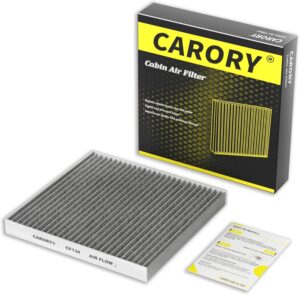
If your car’s HVAC system has started blowing musty, stale-smelling air, or your allergies seem to flare up every time you turn on the AC, a clogged cabin air filter is often the culprit — and it’s one of the easiest and cheapest fixes in car maintenance. This Activated Carbon Cabin Air Filter (CF134/CP134 compatible) is designed as a direct replacement for a wide range of Honda and Acura models spanning multiple model years. In this review, we’ll cover how activated carbon cabin filters work, what results to expect, and whether this particular filter is worth adding to your maintenance routine.
✅ Check Price on Amazon
What Is This Cabin Air Filter?
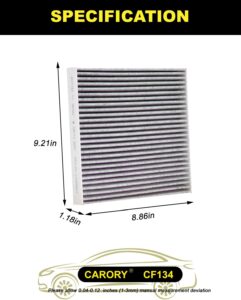
This is a CF134/CP134-compatible replacement cabin air filter, built with an added activated carbon layer designed to absorb odors, along with a filtration media that traps dust, pollen, and other airborne particles before they reach the inside of your vehicle. It’s compatible with a wide range of Honda and Acura models, including the Honda Accord (2003–2016), Civic (2006–2015), CR-V (2007–2016), Odyssey (2005–2016), Pilot (2009–2015), and Acura models like the MDX, RDX, TL, and TSX, among others.
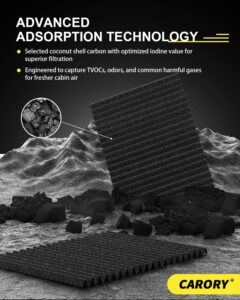
Unlike basic particle-only cabin filters, the added activated carbon layer specifically targets unpleasant smells — from exhaust fumes and ozone to musty odors caused by moisture buildup in the HVAC system — giving it an edge for drivers dealing with lingering odors in their cabin.
How Activated Carbon Cabin Filters Work
A standard cabin air filter primarily traps particles like dust, pollen, and debris as air passes through the HVAC system. An activated carbon filter adds an extra layer of porous carbon material that chemically absorbs odor-causing molecules, rather than just physically blocking particles. This makes it especially effective for eliminating smells like cigarette smoke, exhaust fumes, and general mustiness that a basic filter wouldn’t address.
Many owners specifically upgrade to a carbon filter after noticing a lingering odor problem, and multiple users report that switching to an activated carbon filter successfully eliminated smells like residual cigarette smoke that a previous non-carbon filter hadn’t resolved.
Key Features and Benefits
- Activated carbon layer — absorbs odors from exhaust fumes, smoke, and musty HVAC buildup
- Broad vehicle compatibility — fits a wide range of Honda and Acura models across multiple model years
- Improves HVAC performance — replacing a clogged filter helps restore proper airflow and reduce system noise
- Traps dust, pollen, and allergens — helps reduce allergy symptoms during long drives
- Simple, tool-free installation — most vehicles allow for an easy DIY swap in a matter of minutes
- Budget-friendly alternative — a fraction of the cost of having a dealership or quick-lube shop replace it for you
What Results Can You Actually Expect?
Users consistently report a noticeable improvement in cabin air quality after installing a carbon-based replacement filter, particularly when it comes to eliminating lingering odors that basic filters can’t fully address. Many also note improved airflow and reduced HVAC noise after replacing an old, clogged filter, since a dirty cabin filter can significantly restrict airflow over time.
It’s worth noting that some drivers who are especially sensitive to airflow report that carbon filters can feel slightly more restrictive than basic particle-only filters, since the added carbon layer creates more resistance for air to pass through. For most everyday drivers, this difference is negligible, but those prioritizing maximum airflow above odor control may want to weigh that tradeoff.
🛒 See Current Price & Availability
Who Should Buy This Filter?
This filter is an easy recommendation for Honda and Acura owners looking for an affordable way to improve cabin air quality and eliminate odors, especially if it’s been over a year or 12,000 miles since your last filter replacement. It’s also a great option for anyone who bought a used vehicle with an unknown filter history, or who’s noticed a musty smell coming from their vents.
Drivers with extremely sensitive HVAC systems who prioritize maximum airflow above all else may want to compare specs closely, but for the vast majority of daily drivers, the added odor control is a worthwhile tradeoff for the minimal difference in airflow.
How to Replace Your Cabin Air Filter
- Confirm your vehicle’s cabin air filter location — typically behind the glove box or under the hood near the windshield, depending on the model
- Open the access panel or remove the glove box as needed to reach the filter housing
- Remove the old filter, noting the airflow direction arrows printed on its frame
- Insert the new filter with the airflow arrows facing the correct direction, matching the old filter’s orientation
- Close the access panel or reinstall the glove box
- Mark your calendar to replace the filter again in about 12 months or 12,000 miles
Activated Carbon vs. Standard Cabin Filters
The main difference between activated carbon and standard particle-only cabin filters comes down to odor control. Standard filters do a solid job trapping dust, pollen, and debris, but they don’t address smells the way a carbon layer does. For drivers dealing with persistent odors — whether from smoke, exhaust, or general mustiness — an activated carbon filter is generally the better choice, while those without odor issues may find a standard filter perfectly adequate at a slightly lower price point.
Frequently Asked Questions
How often should I replace my cabin air filter?
Most manufacturers recommend replacing your cabin air filter every 12 months or 12,000 miles, though drivers in dusty or heavily polluted areas may want to replace it more frequently.
Will an activated carbon filter reduce airflow?
Some drivers report a slightly more restrictive airflow compared to basic particle filters, though most users don’t notice a significant difference in day-to-day driving.
Can I install this filter myself?
Yes, most vehicles allow for a simple, tool-free installation that takes just a few minutes, though the exact process and filter location vary by make and model.
Will this filter remove smoke odors from my car?
Many users specifically report success eliminating lingering smoke and musty odors after switching to an activated carbon filter, thanks to its added odor-absorbing layer.
Which vehicles is this filter compatible with?
It’s compatible with a wide range of Honda and Acura models, so it’s best to confirm your specific make, model, and year against the listed compatibility before purchasing.
Final Verdict: Is This Activated Carbon Cabin Filter Worth It?
For Honda and Acura owners dealing with musty odors, reduced airflow, or simply overdue maintenance, this activated carbon cabin air filter offers an affordable, easy way to noticeably improve cabin air quality. The added carbon layer sets it apart from basic filters by tackling odors that particle filtration alone can’t address, and the straightforward DIY installation makes it accessible even for drivers with little mechanical experience. For the price of a single dealership filter change, you can often get enough filters for multiple replacements — making this one of the easiest, most cost-effective upgrades you can make to your car’s interior comfort.